
Blog
Recognizing liars (conspicuous behavior patterns) Part 2

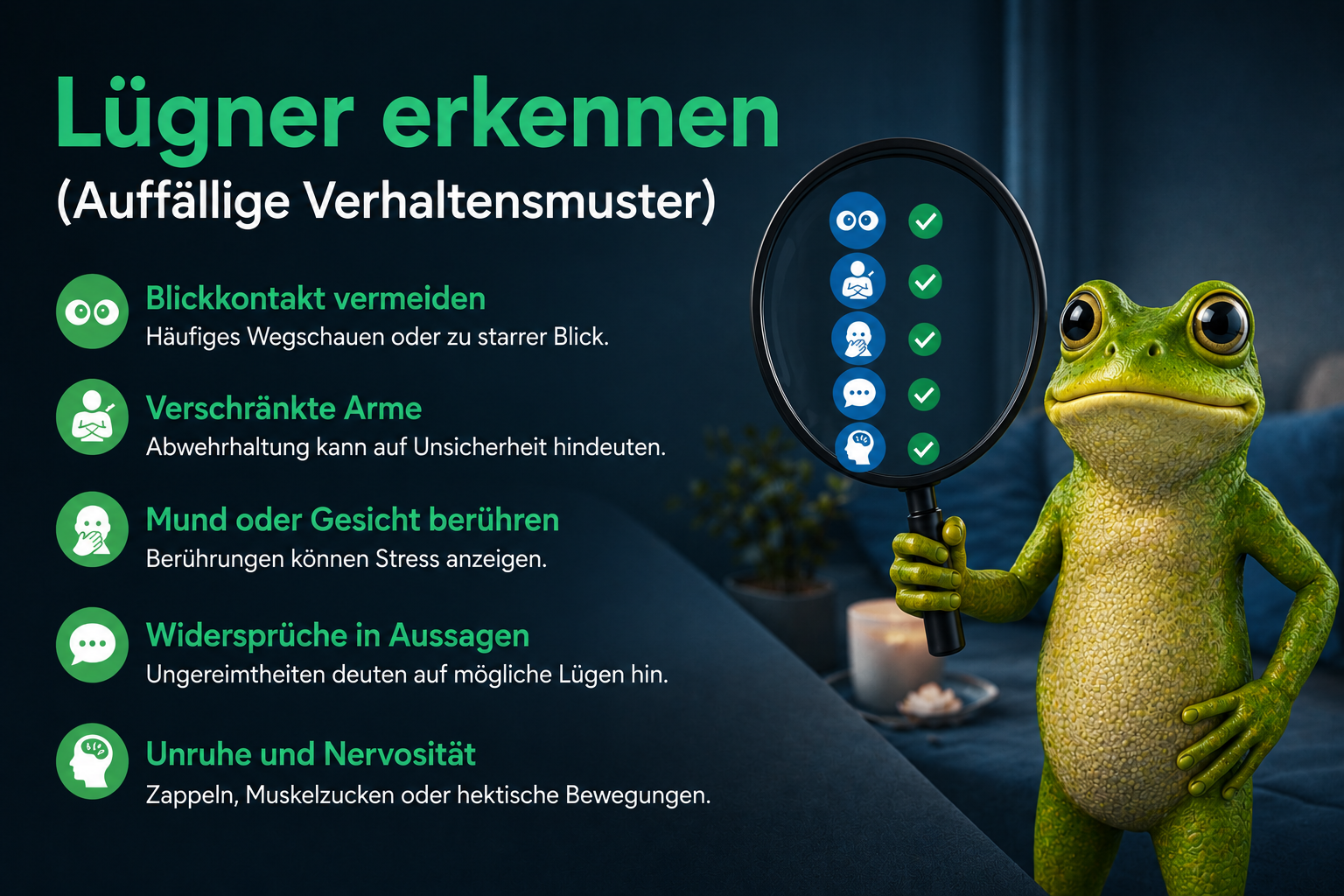
Stress or passivity – how do you hide a lie?
Conspicuous behavior patterns in people can have several underlying causes. We are all different, and so are our reactions to different events. Some people who are normally full of energy and zest for life can become the quietest, shyest people of all in critical situations. Conversely, calm people become arrogant and aggressive.
Studies by behavioral psychologists confirm: when you do something unusual or dangerous, you automatically change. It is a question of discipline and practice when you can consciously control these behavior patterns.
- Lying means taking a risk. How do you deal with this risk?
- Lying means hiding something. By becoming invisible or creating a distraction?
- Lying means deliberately putting the other person’s trust at stake.
Conspicuous behavior patterns
By telling a lie, you take an extra risk.
What I mean by this is the following: in most cases, people lie because they don’t want to take responsibility for something unpleasant, for example. But the lie deepens the extent of this unpleasantness, because you move away from the truth and from solving the problem. A stressful situation arises that you have to deal with as well as possible. The secret of lying is to make it seem as natural and true as possible.
If it seems natural, it also seems true. But how does your own conscience deal with the fact that you could be caught at any time? Some people can bear this stress by becoming noticeably quieter – in a negative sense. They assume that if they withdraw and interact less with the person they lied to, they can avoid the unpleasantness of the lie being discovered. This behavior is most noticeable in people who are normally the most cheerful.
Others try to deal with the resulting stressful situation by diverting the other person’s attention. They behave conspicuously energetically and arrogantly, answer questions irritably or even angrily, and thus draw more attention to themselves than they actually want.
If you want to detect another person’s lies, you must always remember that liars are aware that they are playing with the trust of the person they are lying to. In some people, this can cause strong psychological dilemmas and thus an unstable mental state. In the course of a longer conversation, you can then calmly address the question of trust, and it is only a matter of time before their nerves can no longer take it. And then the truth comes to light.

Exposing lies with verbal tests
Revealing the truth by talking
Some believe the truth can only be discovered through surveillance and espionage; others believe they are masters at telling lies.
But there are a few tricks you can use to expose false statements at any time without much effort. All you need is a suitable location – ideally a comfortable place where the liar is relaxed and cooperative as far as the conversation is concerned – and a little eloquence on the part of the questioner.
- Pay attention to facial activity
- Understand body language and recognize what stands out
- Listen properly, look properly
Exposing lies with verbal tests
On the one hand, verbal tests consist of well-thought-out, targeted questions that initially appear to be inconspicuous, harmless inquiries and then, in the course of the conversation, turn out to be cold-blooded and calculated interrogation questions.
On the other hand, such tests involve an exciting cat-and-mouse game between the two participants. The person being questioned tries to appear as casual and calm as possible. Their words contain the false information and their body language then tries to mask it. But some signals can escape even the most skillful liar, and these are exactly what the questioner should always look out for.
Certain micro-expressions such as frequent blinking or a fake smile. The latter is easy to notice if you look closely. The lips seem to show a smile, but the eyes remain motionless – with a genuine smile, small wrinkles appear around the eyes and all the facial muscles move. Furthermore, sudden emotional outbursts or holding back emotions can indicate a person’s insecurity, as can parroting. You should always let the liar talk for as long as they like. If they make use of this for a conspicuously long time, something may be wrong – and if you give them enough time, the target person will sooner or later give themselves away. A story full of lies often becomes harder and harder to control. The more you go into detail, the greater the likelihood of contradictory statements. Phrases meant to sound credible that are used too often emphasize the insecurity behind what is being said.
In most cases, you get the information you want in the end, but if this technique proves insufficient or its objectivity is questioned, you can carry out the questioning with a technical device – a lie detector. A polygraph from lie-detector.info works with 3 measurement methods and, when operated correctly, can achieve an accuracy of over 95%.